Declining Is a Design Job: Saying No to Donations, Volunteers and Free Logos
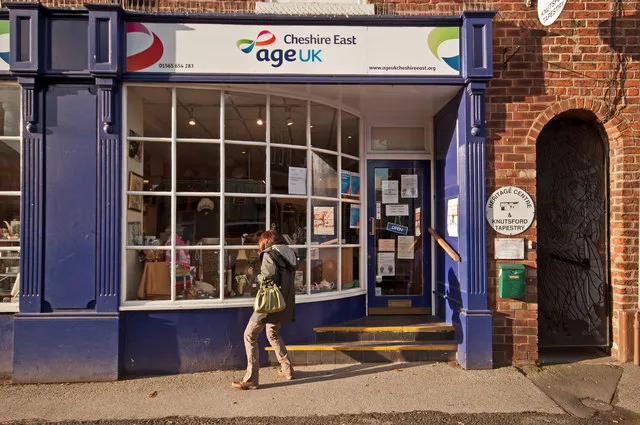
Photo: Roger A Smith , CC BY-SA 2.0, via Wikimedia Commons
Charities say no constantly. No to the bin bags of damp paperback books left outside the shop. No to the volunteer who wants to run social media but cannot make the Tuesday briefing. No to the agency offering six weeks of free design work that would need three weeks of staff time to manage. No to the partnership that comes with a logo lock-up and a set of values you would have to pretend to share.
Most of these refusals are written in the language of a council recycling notice: We are unable to accept this item. Please refer to the list below. Defensive, faintly apologetic, and weirdly cold. Which is odd, because the charity probably spends hours crafting a thank-you email that sounds like a human being wrote it.
The refusal is a design surface. It is as deliberate as the donate button, the volunteer welcome pack or the phone line that does not abandon people. And in a small team, it is also the piece of writing most likely to happen at 4pm on a Friday, with one eye on the school run.
So let us treat the kind no as brand work. Not because it is nice. Because it is where your values either hold up or quietly fall over.
A no is still a conversation
When someone offers you something — a donation, an hour, a skill, a partnership — they are not just making a transaction. They are testing whether they belong. The refusal lands in that tender spot. Get it wrong and the person does not simply go elsewhere. They decide you are not for them.
That is why the borrowed council-recycling voice is such a problem. It protects the organisation from blame but leaves the person holding the awkwardness. Good refusal design does the opposite: it holds the awkwardness for them, names the reason without blaming, and leaves a door open even if that door is not yours.
The shop door: a script that does not shame people
Charity retail is full of refusals. Some donations cannot be sold. Some cannot be stored. Some are a health and safety problem. The trap is making the donor feel inspected in public.
A better shop-door script is short, warm and concrete:
Thanks for thinking of us. We cannot take this today because we do not have the space to sell it safely. If you are heading past the [local landmark], the textile bank there takes [item]. And if you are unsure next time, give us a ring first — we would rather help you avoid the trip.
That is not a policy statement. It is a conversation. It gives a reason, an alternative and a next step. It also gives staff something they can say without improvising while a queue listens in.
Put the same words on a small sign by the door. Not a laminated list of banned items. A sign that says: Not sure if we can sell it? Ask us before you unload. We would rather have the conversation than waste your time. That is a brand decision, not a retail one.
Turning down free design help without insulting anyone
Pro bono offers are tricky. Someone is being generous. You are busy. The work might be useful, but only if you can brief it, manage it, feed it and land it. That is a big if.
A template paragraph you can adapt:
Thank you for offering your time and skill to [charity]. We are not able to take on new design support at the moment because [we do not have the staff capacity to brief and manage it well / this phase of work is already committed / the fit is not right for what we need next]. We would rather say that honestly than leave you waiting or waste your generosity. If you are open to it, we would love to keep your details for [specific future need] — and we are happy to point you towards [other organisation] if that is useful.
The key moves: thank them, name the real reason, refuse the work rather than the person, and offer a specific onward route. Do not say we will keep you on file unless you actually have a file. Do not say we are fully committed at this time if the truth is that the offer is not right. Vague refusals create vague hope, and vague hope turns into resentment.
Volunteers who are not the right fit
Volunteer management has its own version of this. Someone offers time and enthusiasm; the role does not exist, or the shift does not work, or the skills do not match the task. Ghosting is common. It is also a brand decision.
Try this:
We are not able to offer you a volunteer role right now. That is about the shape of what we need at the moment, not about your worth. If you would like, I can tell you what we will be recruiting for in [month] or point you to [local volunteer centre].
It is not gushing. It is not a rejection letter from a bank. It is a clean, respectful no that leaves the person with their dignity and a possible next step.
Three tests for a refusal
Before you send the email or print the sign, run it through three questions.
- Would I be comfortable receiving this in front of a queue? If not, rewrite it for the public version.
- Does it leave a next step — even if that step is away from us? A no with no exit is just a dead end with better manners.
- Does it name the reason without blaming the person? We cannot store this safely is different from you should not have brought this.
And a fourth, for small teams: could a tired staff member say it without improvising? If the answer is no, it is not a script yet. It is a hope.
The 4pm Friday test
The kind no does not get written in the moment. It gets prepared. Put refusal language in your brand guidelines next to your tone-of-voice notes. Keep a shared document of approved paragraphs for the shop door, volunteer applications, pro bono enquiries and partnership offers. Review them when you review your thank-you emails, because they are the same piece of work: making people feel like people at the point where your organisation has to hold a boundary.
A refusal is not a failure of warmth. It is proof that warmth has a shape. Design it properly and people will still be on your side — even when the answer is no.